Literary Review and Analysis: Ethical Considerations in Artificial Intelligence and Public Trust February 2025
Introduction
The use of AI has increased at a fast rate, raising several ethical questions surrounding technology use in different social contexts (Ouchchy et al., 2020). Intelligent technologies are being integrated into education, workforce administration, and society protection, such as policing, and there is controversy regarding fairness, use, transparency, and responsibility (Brendel et al., 2021). Many questions have arisen about the usage of AI, not only in its innovative and efficient aspects but also in its effects on society, such as the issues of bias, privacy, and reliability (Du & Xie, 2021). There has been much public reaction to issues of AI ethics and regulations to govern AI systems, especially in critical areas that determine the lives of human beings (Tai, 2020). Due to the importance of the ethical issues of AI, the ways it impacts trust in the populace remain relevant for developing a more suitable policy regarding the complete acceptability of AI.
The research establishes five fundamental goals which need to be reached. The study analyzes how AI bias, along with transparency levels, affects the trust levels that public populations demonstrate toward various societal applications. The research investigates how the public views automated systems that function in the education and employment sectors and the judicial system. The study assesses technical, social, legal, and philosophical challenges that surround AI ethics and governance, as documented by Brendel et al. (2021). The research examines how ethical frameworks used in AI decision-making affect the level of public acceptance regarding AI systems. Among the study’s intentions exists the development of proposed recommendations for AI governance that uphold ethical requirements besides societal principles. These research goals will improve understanding of ethical AI deployment effects on trust and serve to create guidelines for clear, fair AI technologies.
The present study seeks to answer the question of how ethical considerations surrounding artificial intelligence influence public trust in its societal applications across various fields. Therefore, to address this question, the study will assess AI ethics in the three main spheres: education, employment, and justice. AI is used in teaching and grading methods in education, but issues of fairness and bias have been raised (Belk, 2021). For employment, AI plays an intersectionality in recruitment, tracking an employee’s productivity, and even automation, causing concerns about employment insecurity and prejudice (Du & Xie, 2021). This research compares two areas under the justice system in which the application of AI hits ethical conundrums, predictive policing and AI risk assessment to make legal decisions (Stahl, 2021).
Using a cross-sectional survey approach, this research aims to estimate the level of public trust in AI ethics and general conclusions about AI governance. The outcome will help advance the understanding of responsible AI development and improve the processes of transparency and fairness of AI systems.
Ethical Concerns in AI
Ouchchy et al. (2020) address ethical concerns in AI based on transparency, fairness, and accountability. AI has developed due to the use of data and algorithms in decision-making processes, but the instances cannot explain how the decisions are made due to the nature of the algorithms. Thus, the ‘algorithmic transparency’ concept remains a sensitive and highly debated issue due to bias and fairness. As Tai (2020) pointed out, biased data can invariably result in biased recommendations, which keeps society unequal by reinforcing existing disparities in education, employment, law enforcement, healthcare, and financial services. Ethical AI governance includes measures that must be taken to prevent biases from appearing and address existing ones (Stahl, 2021).
Another central unethical practice in the development of AI is the absence of an explanation of the results obtained by the program (Brendel et al., 2021). Similar to the previous evidence, different AI models and intense learning systems are explained as ‘black boxes’ in which their decision-making process is concealed (Du & Xie, 2021). One of the main issues indicated by this is that when AI decisions are made, users lack adequate explanations to believe in AI (Stahl, 2021). This dilemma is especially sensitive in healthcare and criminal justice because AI advice may inform important life decisions. The accountability of AI solutions in their design also helps achieve similar trust goals by the general public and ethically acceptable solutions (Brendel et al., 2021).
Another critical ethical area that has to be discussed is accountability. It is challenging to assign blame when AI or its results are incorrect or damaging. In traditional human decision-making, the responsibility to be accountable for decisions lies with someone or some organization. However, on the other hand, with AI, there is a shift of responsibility to the engine, which can cause problems such as bias or discrimination (Stahl, 2021). When AI-driven systems unfairly reject job candidates, misdiagnose patients, or enable biased policing, it is unclear whether responsibility lies with developers, users, or organizations (Du & Xie, 2021). Based on the sources, the analysis of accountability for AI that prescribes moral standards for AI adoption and provides a chain of command for decision-making is needed (Du & Xie, 2021).
AI in Education: Ethical Dilemmas and Public Trust
The use of AI in the education system has transformed how students learn, teaching and learning platforms, and even how students are tested (Ouchchy et al., 2020). Special software learns students’ performance and gives individual advice about extending their interest and achieving better results (Du & Xie, 2021). However, certain ethical disputes may arise over the suitability and partiality of AI-based evaluations (Belk, 2021). Informative assessment has a range of drawbacks, and studies claim that the principles of data bias cause inequality (Belk, 2021; Du & Xie, 2021).
The use of AI in education is only acceptable with transparency, the ability to be held accountable, and the question—and, in some cases, the mandate—of ethics. It has been discovered that in a mutual understanding of the application of AI in arriving at decisions in the educational sector, educationists and students are to surrender to and accept the results given by AI (Ouchchy et al., 2020). However, there is a significant concern about student data privacy. The risk lies in how AI systems collect, store, and use student data, potentially leading to unauthorized access, data breaches, or misuse of sensitive information. (Tai, 2020). It is imperative that guidelines and rules concerning the accumulation, storage, and use of student information be ethical to counteract misuse and uphold the laws of data protection.
The ethical application of AI in education and the use of AI technology must be balanced against infringement on the right to privacy and fairness. AI developers and educational institutions must deploy several solutions for algorithm bias and implement transparent approaches that align with legal regulations for AI. Sound AI practices must be implemented to promote education as the primary goal.
AI in the Workforce: Hiring, Surveillance, and Job Security
AI is employed in recruitment processes, tracking employees’ performance, and working processes (Brendel et al., 2021). AI is integrated into the employment processes of most organizations for candidate selection, performance review, or even predicting trends in their employees (Du & Xie, 2021).
A new form of unethical practice is implied in using AI for employee surveillance (Ouchchy et al., 2020). Organizations employ AI to track performance and behavior and assess the productivity of people in the organization (Tai, 2020). While such measures enhance productivity, there is a concern regarding the extent of checking and controlling the independence and privacy of the employees (Brendel et al., 2021). Some studies argue that high levels of AI use in the workplace result in distrust since one cannot tell whether the work was done by AI (Ouchchy et al., 2020). Policies formed to prevent ethical issues in AI should come with certain restraints covering employees’ rights and employ fair assessments.
Another level of workforce automation intensifies the problem of trust in AI. There is a belief that, with the help of AI-driven technologies, human workers will be replaced, causing job losses and instabilities in the economy (Brendel et al., 2021). Automation significantly impacts industries where employment levels drop dramatically, and policy changes must consider reemployment measures. Therefore, for AI to be perceived positively in the hiring process by the public, it must not compound unemployment but balance the job market.
AI in the Justice System: Predictive Policing and Ethical Implications
The application of AI in law and judiciary operations has triggered multiple concerns about fairness and accountability issues (Stahl, 2021). Predictive policing software functions as a crime-predictive resource that helps officers allocate their forces for maximum operational efficiency (Brendel et al., 2021). Even though security tools improve with these tools, their data inputs create conditions that make them more likely to target vulnerable groups (Stahl, 2021). Using crime data from records leads predictive policing technologies together with AI forecasting methods to produce biased results because these programs embed preexisting societal prejudices in their algorithms. AI algorithms trained through past police data containing elevated arrests in low-income mixed communities and minorities will likely show higher crime predictions, thus causing law enforcement to focus disproportionately on such areas compared to affluent neighborhoods. The recurring pattern maintains racial and economic discrimination within law enforcement domains beyond trying to resolve criminal incidents fairly.
The current justice system faces extreme bias problems, and AI-based risk assessment models in sentencing procedures have worsened the situation (Belk, 2021). Compas algorithm shows racial prejudice by design because research shows black defendants are sorted as high-risk offenders as frequently as white defendants who share identical background crime information (Angwin et al., 2016). The implementation of AI predictions has created unjust sentencing consequences because minority groups observe unfavorable treatment from algorithms over factual considerations. The existence of biases within AI-driven justice decisions weakens public confidence while strengthening systematic inequalities. It requires better system transparency and improved data quality training to achieve fairness in the justice system.
People’s confidence in using AI in administering police work significantly depends on perceived equality and correctness. When communities assume that AI-based policing is racist, they are likely to comply with the policies (Brendel et al., 2021). Specifically, the application of ethical AI in justice management involves openness in the algorithmized decision processes and the fight against racism and other types of segregation based on the economic status of particular individuals. To ensure that the resulting AI serves justice correctly, the latter must be fair in these applications.
Present Study
As the role of AI continues to evolve and expand, current studies focus on ethical issues encountered in the development of AI (Brendel et al., 2021). However, best practices regarding their interference with the public’s trust are still lacking. Previous studies have analyzed AI ethics in specific areas, mainly education and policing (Du & Xie, 2021). Yet the most pressing and substantial need is for research on AI’s ethical implications in different areas of activity to create complete strategies for AI governance. Hence, this research seeks to address this gap by evaluating perceptions of AI ethics in education, the workforce, and justice.
The independent variable of this study focuses on AI ethics, which contain essential elements such as transparency, fairness, accountability, and bias mitigation. Public trust in AI constitutes the dependent variable, while surveys will evaluate how people trust decisions made by AI systems in education, employment, and the justice system. The research conducts surveys to determine how AI ethics views shape trust in applications by studying whether disclosure practices and fairness elements increase trust, but bias and unchecked power practices reduce trust. This observation will help identify how well people welcome AI technology by assessing transparency, fairness, and accountability, and consequently, it will generate recommendations for managing AI responsibly.
Hypotheses
The hypothesis tests the concept that AI-related ethical principles incorporating openness together with fairness and accountability strengthen general public trust in AI applications throughout different fields. Research finds evidence backing this point because studies demonstrate that users trust AI systems that appear both transparent and fair (Brendel et al., 2021). Users understand AI decision processes thanks to transparency, which reduces skepticism while boosting their trust in AI-based operations (Du & Xie, 2021). Users develop mistrust of AI systems that maintain an opaque system operation because such obscurity suggests biased and unaccountable behavior (Ouchchy et al., 2020).
The study will use structured survey questions to evaluate public perceptions of AI ethics as an independent variable and trust in AI applications as a dependent variable.
- AI, without bias, will be favorable when integrated into the education process, workforce, and justice system. – The research will evaluate trust levels in AI applications by asking survey participants to rate fairness, transparency, and bias perceptions within these different industries.
- This raises awareness to establish that the strategies towards the regulation of AI will be in line with improved public acceptance of AI governance. – Public knowledge about AI regulation and ethical governance strategies and policies serves as a research test for understanding trust relationships between AI applications and the public audience. The questionnaire assesses participant awareness of AI ethics principles together with their perceived risks and their viewpoint on AI oversight to evaluate how awareness affects their trust in AI systems.
Thus, by testing these hypotheses, this study will help expand the discussion on ethical artificial intelligence applications and provide policymakers with recommendations on increasing the credibility of artificial intelligence.
References
Belk, R. (2021). Ethical issues in service robotics and artificial intelligence. The Service Industries Journal, 41(13-14), 860–876. https://doi.org/10.1080/02642069.2020.1727892
Brendel, A. B., Mirbabaie, M., Lembcke, T. B., & Hofeditz, L. (2021). Ethical management of artificial intelligence. Sustainability, 13(4), 1974. https://doi.org/10.3390/su13041974
Du, S., & Xie, C. (2021). Paradoxes of artificial intelligence in consumer markets: Ethical challenges and opportunities. Journal of Business Research, 129, 961–974. https://doi.org/10.1016/j.jbusres.2020.08.024
Ouchchy, L., Coin, A., & Dubljević, V. (2020). AI in the headlines: The portrayal of the ethical issues of artificial intelligence in the media. Ai & society, 35(4), 927-936. https://doi.org/10.1007/s00146-020-00965-5
Stahl, B. C., & Stahl, B. C. (2021). Ethical issues of AI. Artificial intelligence for a better future: An ecosystem perspective on the ethics of AI and emerging digital technologies, 35-53.
Tai, M. C. T. (2020). The impact of artificial intelligence on human society and bioethics. Tzu Chi Medical Journal, 32(4), 339–343. DOI: 10.4103/tcmj.tcmj_71_20
Essay: Defining Hybrid Warfare in the 21st Century – The Role of Disinformation February 2025
Hybrid warfare is now seen as the new normal and a new way of fighting in the contemporary world. Not limited to military confrontations, contemporary opponents use kinetic and non-kinetic actions that are not easily distinguishable between war and peace. Fundamental to this approach is disinformation – a systematic distortion and misuse of facts to create confusion, chaos, and shape public opinion. With social media integration into the daily lives of people, fake news morphed from a nuisance into a deadly tool that threatens to dismantle democracies and erode state cohesion. This paper discusses the development, technology, outsourcing approach, policy measures, and prospects of disinformation in hybrid warfare. It proves that disinformation is not a new invention; however, the current type of disinformation is qualitatively different from the previous ones, and its impact has exceeded the capabilities of the existing countermeasures of the world governments. Disinformation, through its use of digital technology and decentralized production, changes the identity of modern hybrid warfare and makes states develop new strategies to protect democratic governance and national security systems.
- Historical and Theoretical Foundations
Indeed, it is important to note that hybrid warfare goes beyond conventional battles and wars, as the idea of warfare as a battle of power and perception has been circulating for quite some time. Military strategists of the past asserted that information management is an essential aspect of warfare that affects the war’s course. These observations have gradually developed into a complex model, which is political, psychological, and informational, and forms a comprehensive strategy.
Singer and Brooking provide insight into how virtually every communication platform has become a strategic asset. They show that the digitization of networks, mainly social media, allows state and non-state actors to stage interference processes beyond propaganda techniques (Singer & Brooking, 2018). They find out that these channels act as force multipliers, meaning that they amplify stories and news in ways that could not have been possible in the pre-Internet and social media age.
In addition, Thomas Rid offers a detailed chronicle of the origins of modern influence operations and their development in the post-Cold War world. Rid unfolds an escalation process from outright psychological warfare to algorithm-based disinformation operations (Rid, 2020). His work clearly shows a new trend where the act of releasing fake news is a distinct operational domain separate from the source of the fake news, making it challenging to pinpoint its origin and counter it.
In another criticism, Johnson posits that while conventional power assets are still crucial, the new age revolution is within the strategic deception of the enemy without a fight (Johnson, 2018). Johnson focuses on the fact that disinformation is not just an additional tool but an independent pillar that weakens the political and social structure, which means there is no need for direct kinetic actions. Altogether, these seminal works show that disinformation becomes part of the larger spectrum of political warfare. It is possible to distinguish the clear evolution from the early cases of psychological control to the modern means of psychological manipulation that are so elaborate and rely on the collection and analysis of big data. Instead, it is an evolution that points to the improvement in technology and the enhanced appreciation of the impact of perception on the control of the strategic process. Thus, these works make up the backbone of the modern theory of hybrid warfare, proving that information manipulation is a universal principle and an exceptionally efficient weapon.
- Digital Transformation and Cyber-Enabled Disinformation
The advancement in information technology has, therefore, brought about a revolution in the production and sharing of information. Unlike traditional warfare, where fake news is disseminated within a particular region and at a given time, cyber capabilities that support the distribution of disinformation are boundaryless. The Department of Defense has analyzed information operations, revealing that disinformation can precede conventional military actions by influencing an adversary’s decision-making process (Qureshi, 2020). Supporting this analysis, the RAND Corporation argues that using sophisticated technologies means the enemy can quickly identify and attack those most in need (Ray, 2022).
Brookings Institution’s study also builds upon how fake news has been used as propaganda tools to spread false messages through social media to distort society’s perception, thereby causing a trust deficit and splintered population (Abdyraeva, 2020). According to McKinsey & Company, this trend will persist as platforms evolve and new technologies emerge (Fadia et al., 2020). Also, the online article further supports how these cyber-supported operations increase the scope of disinformation and the dynamism and sophistication of the threat landscape (Rauta, 2020). Last but not least, Lawfare Media has provided an analysis of developing responses to cyber-enabled information warfare that provides essential information for governments on how to approach the problem (Lin, 2018).
As the digital age has arrived and adapted warfare, where information is a tool that can be used just as quickly as an attack, this has changed the warfare landscape altogether. It is a new concept of war where cyberspace is combined with the conventional warfare paradigm, where information control is as important as territorial control. These have made disinformation a flexible and constantly developing part of hybrid warfare, threatening state security paradigms.
- Outsourcing and Decentralized Production of Disinformation
Contemporary hybrid warfare is based on a complex network for creating fake news and is a web of different producers. Private companies, contractors, and third-party sellers from different legal jurisdictions and world areas systematically produce fake content. These entities construct specific stories, create deceptive videos, and maintain highly synchronized social media operations flexibly and efficiently. Instead of directly employing such state actors, these adversaries hire third parties to exploit their technical knowledge and specialization. In contrast, the adversaries deny any knowledge of the attacks (Dowse & Bachmann, 2022).
This operational model can be described as highly hierarchical and based on a clear division of labor. Conveyors of content aim to create quality and captivating content to reach the targeted audiences. Data analysts then must use various patterns and algorithms to find all the weaknesses that can be leveraged in digital environments and narrative engineers to create cohesive storylines that can exploit the cracks in the political and social systems. What is produced is a versatile disinformation that encompasses fake news, photo, and video shenanigans, and carefully engineered social media posts. Every element is created to capitalize on existing prejudice and rift within the target communities.
The decentralized production system also has the advantage of scalability and flexibility in response to growing market demand. Currently, third-party vendors ensure constant enhancement of the methodologies with the help of feedback gathered from digital platforms and geopolitical shifts. This approach means that it is possible to continuously deploy new strategies to counter disinformation since the tactics used by the former change with time. The nature of disinformation is not stagnant due to the relationship between technological advancement and content creation; it changes occasionally to suit the targeted regions or demographics.
For instance, the Atlantic Council has explained how the rivals use various independent sources to saturate the information environment with disinformation (Sari, 2020). The lack of central authority means numerous, disjointed sources shape a particular story. It makes it extremely hard to attribute and continue to contain since others continue to propagate fake news even when individual sources are exposed or dealt with. Every participant in this network works independently to achieve his/her goals, but all the actions are part of a big plan to change people’s perceptions to sway the election results.
Social media platforms are helpful in this decentralized system in several ways. Based on the findings of the European Commission, it is a challenge to regulate or even accurately identify the sources of such fake news as the content is scattered (Iosifidis & Nicoli, 2020). The algorithms that dictate the distribution of content on these platforms tend to encourage sensational content or those with a polarizing nature; this makes such platforms highly effective when it comes to outsourced disinformation. Consequently, one can create and distribute fake messages and news through social media platforms in days, thus overwhelming the targeted environment.
Currently, there is evidence that the market for disinformation services is growing rapidly around the world. According to the Global Initiative Against Transnational Organized Crime, more private vendors offer specific narrative solutions depending on the client’s needs (Global Initiative against Transnational Organized Crime (GI-TOC), 2025). This commercialization adds more quantity, varies false content to the market, and enhances production methods. This competition has enhanced the quality, speed, and complexity of disinformation these competitors provide.
The outsourcing model is rather different from the state-controlled propaganda that was characteristic of the Soviet bloc countries. It allows its advocates to act beyond the legal and diplomatic maneuvering range and at the same time achieve some strategic objectives. Thus, using many specific sources of disinformation, the actors increase not only their impact but also the degree of uncertainty in the information environment. Not only does it increase the amount and intensity of fake news but also increases the sturdiness of fake news as the elimination of one of those channels does not necessarily decrease the chances of fake news circulation. It has transformed into a sophisticated strategy of manipulating information that cannot be overcome by conventional means of operations.
- Policy Responses and Countermeasures
Authorities worldwide have tried to counter disinformation in hybrid warfare by adopting policies restricting it and its effects. A composite framework includes strategic approaches, regulation, publicity campaigns, inter-agency cooperation, cybersecurity, and global collaboration. These measures are applied with great detail to mitigate the current and potential threat of disinformation with no further elaboration.
On the strategic level, there is a rich source of knowledge in the form of EBP guides like the one from Carnegie Endowment that can outline the collaborative effort among agencies. They also recommend the creation of specific teams and procedures for the exchange of intelligence products and the coordination of messages (Bateman & Jackson, 2024). Emphasis is placed on the interaction of the government’s activities and its ability to maintain cohesiveness and responsiveness to the new techniques used by the side of disinformation. They also help to avoid the scattering of efforts among various governmental agencies to achieve these goals.
The economic, military, and informational approaches should be used in the fight against hybrid threats (De Graaff et al., 2020). Governments use economic measures—penalties and fines against individuals and organizations spreading fake news. These financial measures are as follows and are consistent with the defense policies, making it unprofitable for the rivals (Ilona, 2023). The plan is synchronized so that one element does not compete with other plans because economic pressure complements the strategic messaging and military build-up.
The Carnegie Endowment also focuses on enhancing democratic institutions to protect the freedom of the media. In this area, the policy measures include legal changes aimed at protecting independent media outlets, financing the media watchdogs, and backing investigative journalism (Bateman and Jackson, 2024). These safeguard the people’s freedom to obtain the necessary information and prevent the citizens from being manipulated. In this way, the governments want to strengthen institutional responsibility to create a strong informational structure.
The European Parliament has elaborated several strategies for tackling disinformation based on the regulation of the process and reaction to it (Bleyer-Simon, 2021). These include constant surveillance of social media, immediate sanctioning of anyone found misusing them, and setting up measures for training people on the appropriate use of these media (Grossman & Khadeja Ramali, 2020). It is because regulatory measures are implemented to prevent the spread of fake news without violating free speech, leading to a balanced digital environment. Rapid response mechanisms help to act as soon as possible when the disinformation is identified so that any wrong information is not spread widely.
There is a need to develop a resilient society to withstand corrupt practices and the lack of a functioning democratic system (Trifunović & Obradović, 2020). Activities in this area include civic education programs and activities that seek to enhance computer literacy among the citizens. It is, therefore, aimed at building confidence in government institutions and developing an electorate less likely to be influenced by fake news. These measures are; therefore, a way of countering manipulative posts that people develop due to the anonymous nature of the internet.
The following sections of the policy response are also important. The measures aimed at enhancing cybersecurity are also important. Governments are strengthening their cybersecurity arrangements to counter cyber threats and fake news regarding key technologies. Efforts to work with the private sector aim to safeguard the data and make them immune to cyber-attacks and operations. These technical measures are incorporated into national security policies to mitigate the exploitation of technical glitches.
It is also important to note that diplomacy has a role in such situations. In such forums and through various bilateral relations, the states develop standards on information credibility. Interstate cooperation is based on developing shared information space for joint counteractions to disinformation products. The above actions are crucial in building a united front to fight disinformation that, as has already been noted, has gone internationally.
- Emerging Trends, Challenges, and Future Directions
In the future, the nature of disinformation and hybrid warfare will remain fluid and change, and new tactics and strategies appear for politicians. The recent work of NATO on hybrid warfare brings forward the point that new-age technologies like artificial intelligence and deep learning will only reshape the digital battlefield further and allow for even more detailed disinformation campaigns (Mälksoo, 2020). CSIS has captured this year’s increase in disinformation and stated that new technologies emerge and expose new threats in ever-growing cycles (Xu et al., 2023).
According to the Council on Foreign Relations, hybrid warfare adds information about war and economic pressure to the concept of conflict (Weissmann et al., 2022). CSIS further reviews that the war has shifted to the virtual sphere of social media, where content is created, fabricated, and shared in real-time (Rehmat, 2024). The UNAP report continues the statement that the evolution of hybrid warfare indicates the need to adapt to defense strategies as tactics change frequently (Șușnea et al., 2021).
HCSS provides policies focusing on responsive strategies that may meet the present threats and possible future changes (Bertolini et al., 2023). Open Research Europe offers an analytical view of how disinformation campaigns evolve and how it is high time to think out of the box to counter such adversarial strategies. International Politics has discussed how fake news threatens national security and established that a response to this problem has to be based on technology and conventional intelligence tools (Neo, 2020).
Some additional information is derived from Routledge, which emphasizes that digital disruption is the key to new international relations and global governance. In add. International collaboration is also needed to navigate the global world, interiors, 2024). Otherwise, tracking new social media trends is necessary to identify potential disinformation risks (Gunneriusson, 2021). In other words, it is seen that the stories are dynamic and constantly evolving while the efforts to counter the narratives remain fragmented and disjointed (IVANČÍK, 2023). Last but not least, the article from the Brookings Institution on hybrid warfare in the post-truth world concludes the need to develop unique and evidence-based approaches to address new disinformation threats (Cosentino, 2020).
These emerging trends indicate that hybrid warfare’s future character is dynamic and in a state of evolution. Emerging technologies, changing social relations, and increased connectivity of digital networks provide the necessary infrastructure for spreading fake news with limited interference. The approaches that will be required in the future will be more proactive rather than responsive, starting with protecting cyberspace and extending to protecting thought processes. The fact that hybrid tactics are constantly changing means that policies must incorporate knowledge from numerous fields and approaches.
In conclusion, using disinformation as one of the key components of hybrid warfare has changed the concept of war in the 21st century. In the contemporary world, dominated by information warfare, actors can undermine the system and influence people’s opinions without using armed forces. This new theatre of war does not fit into the static mold of conventional defense and foreign policy, and forces states to devise new multi-disciplinary approaches that involve cyberspace security, diplomacy, government regulation, and multilateralism. Altogether, the above works reveal that disinformation is a fundamental component of a spectrum of political warfare. It starts from the primary stages of psychological manipulation and psychological techniques up to the current state of affairs of technology. This evolution is also due to perception of technical and tactical evolution but also due to a growing awareness of how perception management determines the strategic struggle. These works can be considered as the basis of the modern hybrid warfare theory because the authors combine historical experience and innovation insights and prove that information manipulation has been an effective tool throughout ages. Evidently, the fight against disinformation is a complex process that can only be fought through a comprehensive approach. In this regard, while attempting to cope with these challenges, it can be argued that the formation of effective policies and the strengthening of institutions for the future is critical in ensuring national security and democratic values in the era of post-truth.
References
Abdyraeva, C. (2020). The use of cyberspace in the context of hybrid warfare: means, challenges and trends. https://www.ssoar.info/ssoar/bitstream/handle/document/69232/ssoar-2020-abdyraeva-The_Use_of_Cyberspace_in.pdf?sequence=1&isAllowed=y.
Arcos, R., Gertrudix, M., Arribas, C., & Cardarilli, M. (2022). Responses to digital disinformation as part of hybrid threats: a systematic review on the effects of disinformation and the effectiveness of fact-checking/debunking. Open Research Europe, 2. https://www.ncbi.nlm.nih.gov/pmc/articles/PMC10446021/.
Bateman, J., & Jackson, D. (2024). Countering disinformation effectively: an evidence-based policy guide. https://carnegieendowment.org/research/2024/01/countering-disinformation-effectively-an-evidence-based-policy-guide?lang=en.
Bertolini, M., Minicozzi, R., & Sweijs, T. (2023). Ten Guidelines for Dealing with Hybrid Threats: A Policy Response Framework. Hague Centre for Strategic Studies (HCSS). https://hcss.nl/wp-content/uploads/2023/04/Guidelines-for-the-Deterrence-of-Hybrid-Threats-HCSS-2023.pdf.
Bleyer-Simon, K. (2021). Policies to tackle disinformation in EU member states. European Digital Media Observatory. https://cadmus.eui.eu/bitstream/handle/1814/74325/Policies-to-tackle-disinformation-in-EU-member-states-during-elections-Report.pdf?seque.
Cosentino, G. (2020). Social media and the post-truth world order. London; Cham: Palgrave Pivot. https://www.academia.edu/download/63305309/Social_Media_Post_Truth_World_Order_Cosentino_Chapter120200514-31136-xew3wi.pdf.
De Graaff, N., Ten Brink, T., & Parmar, I. (2020). China’s rise in a liberal world order in transition–introduction to the FORUM. Review of International Political Economy, 27(2), 191-207. https://www.tandfonline.com/doi/pdf/10.1080/09692290.2019.1709880.
Dowse, A., & Bachmann, S. D. (2022). Information warfare: methods to counter disinformation. Defense & Security Analysis, 38(4), 453-469. https://www.academia.edu/download/103179075/Final_Accepted_Version.pdf.
Fadia, A., Nayfeh, M., & Noble, J. (2020). Follow the leaders: How governments can combat intensifying cybersecurity risks. McKinsey & Company, September, 16. https://www.mckinsey.de/~/media/McKinsey/Industries/Public%20and%20Social%20Sector/Our%20Insights/Follow%20the%20leaders%20How%20governments%20can%20combat%20intensifying%20cybersecurity%20risks/Follow-the-leaders-How-governments-can-combat-intensifying-cybersecurity-risks-F.pdf.
Global Initiative against Transnational Organized Crime (GI-TOC). (2025, February 17). Global Initiative. https://globalinitiative.net/.
Grossman, S., & Khadeja Ramali. (2020). Outsourcing Disinformation. Lawfare. https://www.lawfaremedia.org/article/outsourcing-disinformation.
Gunneriusson, H. (2021). Hybrid warfare & theory. Icono14, 19(1), 15-37. https://dialnet.unirioja.es/descarga/articulo/7756862.pdf.
Ilona, D. (2023). Digital transformation of international trade and logistics in the conditions of pandemics and military conflicts. https://elar.khmnu.edu.ua/bitstreams/59d0dd52-4df4-4bbd-be90-b4d8a6cef54f/download.
Iosifidis, P. (2024). Theoretical understanding of State-Sponsored Disinformation. In State-Sponsored Disinformation Around the Globe (pp. 21-36). Routledge. https://library.oapen.org/bitstream/handle/20.500.12657/93091/9781040156520.pdf?sequence=1#page=36.
Iosifidis, P., & Nicoli, N. (2020). Digital democracy, social media and disinformation. Routledge. http://lib.lemhannas.go.id/public/media/catalog/0010-022200000000002/swf/7060/Digital%20Democracy,%20Social%20Media%20and%20Disinformation.pdf.
IVANČÍK, R. (2023). On Disinformation and Propaganda in the Context of the Spread of Hybrid Threats. Vojenské reflexie, 18(3), 38-58. http://vr.aos.sk/images/dokumenty/archiv_cisel/2023/vr_2023_3_03_Ivancik.pdf,
Johnson, R. (2018). Hybrid war and its countermeasures: a critique of the literature. Small wars & insurgencies, 29(1), 141-163. https://doi.org/10.1080/09592318.2018.1404770.
Lin, H. (2018). Developing responses to cyber-enabled information warfare and influence operations. Lawfare, September, 6. https://www.lawfaremedia.org/article/developing-responses-cyber-enabled-information-warfare-and-influence-operations.
Mälksoo, M. (2020). Countering hybrid warfare as ontological security management: the emerging practices of the EU and NATO. In Ontological Insecurity in the European Union (pp. 126-144). Routledge. https://kar.kent.ac.uk/67577/3/Countering%20Hybrid%20Warfare%20as%20Ontological%20Security%20Management_clean_15June2018.pdf.
Neo, R. (2020). The securitisation of fake news in Singapore. International Politics, 57(4), 724-740. https://www.researchgate.net/profile/Ric-Neo/publication/336270460_The_securitisation_of_fake_news_in_Singapore/links/5f15544692851c1eff2183bb/The-securitisation-of-fake-news-in-Singapore.pdf.
Quirk, S. (2021). Lawfare in the disinformation age: Chinese interference in Taiwan’s 2020 elections.Harv. Int’l LJ,62, 525. https://papers.ssrn.com/sol3/Delivery.cfm?abstractid=3939849.
Qureshi, W. A. (2020). The rise of hybrid warfare. Notre Dame J. Int’l Comp. L., 10, 173. https://scholarship.law.nd.edu/cgi/viewcontent.cgi?article=1124&context=ndjicl.
Rauta, V. (2020). Towards a typology of non-state actors in ‘hybrid warfare’: proxy, auxiliary, surrogate and affiliated forces. Cambridge Review of International Affairs, 33(6), 868-887. https://www.tandfonline.com/doi/full/10.1080/09557571.2019.1656600.
Ray, A. (2022). Disinformation and Propaganda as Tools of Influence in Cyber Space. https://dspace.cuni.cz/bitstream/handle/20.500.11956/177525/120429095.pdf?sequence=1.
Rehmat, S. (2024). Hybrid Warfare: Cyber Espionage, Economic Coercion, and Information Campaigns in the US-China Rivalry. Pakistan Horizon, 77(4), 63-80. https://pakistan-horizon.piia.org.pk/index.php/pakistan-horizon/article/download/417/336.
Rid, T. (2020). Active measures: The secret history of disinformation and political warfare. Farrar, Straus and Giroux. https://profilebooks.com/wp-content/uploads/wpallimport/files/PDFs/9781788160742_preview.pdf.
Sari, A. (2020). Hybrid threats and the law: Concepts, trends and implications. Hybrid Centre of Excellence Trend Report, 3. https://www.hybridcoe.fi/wp-content/uploads/2020/07/Hybrid-CoE-Trend-Report-3.pdf.
Singer, P. W., & Brooking, E. T. (2018). LikeWar: The weaponization of social media. Eamon Dolan Books. https://international-review.icrc.org/sites/default/files/reviews-pdf/2019-12/irrc_101_910_21.pdf.
Șușnea, E., & Ionuț-Cosmin, B. U. Ț. Ă. (2021). Artificial Intelligence in Hybrid Warfare: A Literature Review and Classification. STRATEGIES XXI-Security and Defense Faculty, 17(1), 294-302. https://revista.unap.ro/index.php/XXI_FSA/article/download/1255/1225/.
Trifunović, D., & Obradović, D. (2020). Hybrid and cyber warfare-international problems and joint solutions. National security and the future, 21(1-2), 23-48. https://hrcak.srce.hr/file/361416.
Weissmann, M., Nilsson, N., Palmertz, B., & Thunholm, P. (2021). Hybrid warfare: Security and asymmetric conflict in international relations (p. 312). Bloomsbury Academic. https://library.oapen.org/bitstream/handle/20.500.12657/58862/9781786736550.pdf?sequence=1.
Xu, L., Qereshniku, E., Hazari, H., & Edwards, M. (2023). Understanding National Security Threats Enabled by Artificial Intelligence: Implications for CSIS. ARTIFICIAL INTELLIGENCE, 101, 9. https://sppga.ubc.ca/wp-content/uploads/sites/5/2023/06/CSIS_Report_2023.pdf.
Essay: The Future of Artificial Intelligence in the Context of Hybrid Warfare April 2025
A logical assessment of current sociopolitical developments or the application of basic game theory principles leads to the conclusion that the US Armed Forces will eventually update its hybrid warfare doctrine to integrate the use of Artificial Intelligence, robotics, and autonomous systems. The ubiquity of AI as it pervades business and social sectors, from enhancing apps to talks of replacing human workers, emboldens the armchair strategist to predict a future where any human activity requiring computing, networking, and robotics will eventually give in to the pull of AI. To the more sophisticated, a game theory principle called “non-cooperative games” is useful in predicting what state actors would do if faced with the reality of hybrid warfare “HW”. In game theory, non-cooperating participants are incentivized to find a competitive advantage to beat the opponent (Lu, 2024; Cimpeanu et al., 2022). Although AI’s mainstream popularity is only a few years old, the US government is aware of the role that AI will play on the battlefield of the future and has been investing billions of dollars into this technology as early as 2018 (Araya & King, 2022). Even if the adoption of AI-based technologies into HW’s doctrine is inevitable, it is not clear what type of AI is the most relevant and the most effective to use. In a systematic review of literature involving the ProQuest Database, Susnea and Buta (2021), discovered that more than half of the research outcomes focused on a generalized view of AI in the context of HW. Only a few articles discuss AI’s specific capabilities in terms of machine learning, deep learning, data mining, and neural networks with HW. One way to narrow down the scope in terms of relevance and effectiveness is to break down the two major ways the US military utilizes AI, and that is either in computer software enhancements or upgrading the technologies supporting robotic and autonomous systems, or “RAS” (Susnea & Buta, 2021). With an eye towards the development of cutting-edge technologies to improve the nation’s capabilities in RAS, one can argue that instead of focusing only on deep neural networks, the US Armed Forces will invest in a newer AI concept called spiking neural networks, because the predicted outcome is a thinking machine that can mimic the ability of a human brain.
What is Hybrid Warfare?
Hybrid warfare or “HW” is not just a concept that was developed to describe a phenomenon, but also as a catchphrase used as a dynamic mechanism for integrating ideas and various elements that are usually excluded when discussing conventional warfare. NATO (2024) traced the first use of the term HW in security literature as early as 2005. The first application of the terminology was to describe the strategies needed to confront unconventional warfare methods employed by the Taliban and local insurgents capable of applying unorthodox tactics.
Through the years, the term HW has evolved to include strategies and frameworks that state actors and non-state actors use to achieve military or political victory. Thus, these agents use unconventional methods to “undercut national will, sow discord, confuse political actions and actors, and undermine national authority, political legitimacy, and the freedom to maneuver among target nations or populations” (NATO, 2024, p. 16). Although the element of unconventionality has been made clear, the goal of clarifying the meaning of HW is not yet done, because there is ambiguity concerning the identity of the actors involved in it. In this regard, Tarik Somaz expanded the scope how agents can utilize HW (NATO, 2024, p. 16):
- A synergistic fusion of different tools and tactics, such as the use of terrorism and criminal activities to upend the battlespace.
- The coordinated use of a combination of conventional and non-conventional armed forces.
- The combined use of military or non-military capabilities to harass the enemy.
- The deliberate use of subthreshold activities, whether violent or non-violent, in provoking the enemy to respond a certain way; and
- The use of non-violent but subversive tactics to carry out political goals.
Even with an expanded definition, the ambiguity surrounding HW persists. Like the conceptual framework of terrorism, it is not easy to pin it down with a standard semantic analysis. Thus, the next best thing is to set up its proper usage through its contextual meaning. Therefore, taking into consideration what the US Armed Forces needs to do to come out victorious, HW means the combined use of conventional and non-conventional methods and military and non-military elements to affect the battlespace. One example is the use of RAS to support and create an advantage for ground troops.
RAS can be manifested in robotics and similar platforms to minimize human casualties. Instead of sending human soldiers into the combat space, the RAS-powered equipment can take their place to reduce the casualty rate. Although it will be advantageous for the US army to develop autonomous units like driverless tanks and other unmanned vehicles for reconnaissance or surveillance purposes, the best use of limited resources is to enhance the current use of drone technology to make the system autonomous with minimal human involvement in the implementation of military tactics. Before going any further, however, it is best to break down the current use of drone technology.
The Ukraine-Russia conflict has introduced a new way of utilizing drone technology in warfare. Although affluent countries had had access to unmanned aerial vehicles or UAVs, and these UAVs are technically labeled as drones, the more popular application of the term drone refers to smaller versions that began as radio-controlled rotor-driven flying machines that were initially linked to hobbyists rather than the military. In the beginning, the commercially available drone technology did not have aircraft-like features of UAVs designed for military purposes. A typical drone carries a camera for photography or surveillance purposes (Samus & Artemenko, 2025). Most commercially manufactured drones are also designed to transport light materials. However, in the war between Russia and Ukraine, the world has seen the deployment of modified drones so that these radio-controlled UAVs are now equipped with military ordinance.
Ukraine’s development of a new type of drone capable of destroying tanks and armored carriers adds another sub-category in hybrid warfare. In the past, mass-produced non-military drones were a little more than expensive toys for adults, but now Ukraine is merging the concept of civilian drones and missiles, creating a new weapon called drone missiles or “rocket drones” (Post, 2024). Finding alternative ways of bolstering its defenses and the need for effective counterattacks has led to the emergence of the new drone-missile hybrids (Post, 2024). Ukraine’s innovative use of civilian drones can be considered as guerrilla tactics against a much powerful enemy, but their Russian counterparts are also using drone technology; the only difference is that the Russians are further ahead in incorporating AI into their UAVs (Samus & Artemenko, 2025). As early as 2017, Russian leader Vladimir Putin has been laying down the groundwork for the accelerated use of Artificial Intelligence in their modern defenses (Samus & Artemenko, 2025). As predicted by the game theory model, if participants are left to their own devices, each one will strive to develop a competitive edge against their opponents. For Putin and other world leaders, mastery of AI provides them that advantage.
What is Artificial Intelligence?
Since ChatGPT took the world by storm only a few years ago, the concept of Artificial Intelligence has been made accessible to people from all walks of life. Coinciding with the global fame of generative AI, from which stock ChatGPT, Microsoft’s Co-Pilot, and Google’s Gemini are derived from, related terminologies like large language models or “LLMs” and machine learning are also on the rise. AI-related terms are sometimes used interchangeably, adding confusion to an already complex topic. AI, as the name suggests, is man’s attempt to develop a computer or machine that has the same or approximately the same cognitive capabilities as a human being (QuantumBlack, AI by McKinsey, 2024). Microsoft account holders, for example, can converse with Co-Pilot in the same way that they converse with a friend. Co-Pilot can also explain how to create a bonsai tree or how to play chess. More sophisticated AI models can learn to play chess and, after a few hours of studying the basic moves, can play chess at a grandmaster level. AI is the generic term or the conceptual framework, but the strategy or process to get to where machines can learn, perceive, and solve problems is another matter. Computers and machines can only function within the confines of their pre-programmed instructions.
The breakthrough in AI research came in the form of machine learning. An algorithm was created that enabled computers to detect patterns, and based on that pattern-recognition capability, computers are then able to make predictions or give an answer based on voluminous data processed beforehand (Song & Chen, 2021). The AI literature describes this process as “training” to detect patterns (Song & Chen, 2021). The next breakthrough that led to the proliferation of commercially available AI is called deep learning, which is an advanced form of machine learning (QuantumBlack, AI by McKinsey, 2024). In deep learning, algorithms led to the creation of the so-called neural network, which is a conceptual framework inspired by how neurons in the brain interact with each other to learn, process information, and solve problems. When the neural networks expand to incorporate billions of connections, the new models are now known as a Large Language Model or LLM (QuantumBlack, AI by McKinsey, 2024). In LLMs the action mechanism is also known as “hierarchical iterative learning” (Song & Chen, 2022). The application of LLM is called generative AI, which is a type of AI that can make sense of abstract patterns to create and interpret text, as well as create images and video, and gave rise to Gemini or ChatGPT (QuantumBlack, AI by McKinsey, 2024). Therefore, the next big thing is to innovate the tech behind neural networks and generative AI so that some of the cognitive tasks traditionally given to humans are now processed or analyzed by AI.
Why Incorporate AI into Hybrid Warfare?
Current breakthroughs in AI research, coupled with commercial successes and real-world practical applications, could lead to the assumption that armed forces all over the world are in an AI arms race. Game theory, however, provides a solid scientific grounding in predicting that the most powerful armies in the world sees AI as a profound game changer both as a defensive and offensive military technology. During the Cold War of the 1960s to 1980s, the United States and the former Soviet Union engaged in a space race, to see which nation had the wherewithal to bring a manned expedition to the moon and back. In contemporary times, Russia and the US are engaged in a similar contest, but this time around the goal is the development of the most advanced AI tech. Just like in the past, the science aspect of the competition is what the public sees, but underneath all that is the civil and military defense part of the said tech race. As early as 2017, years before the term AI entered the realm of popular culture, Vladimir Putin was quoted saying: “Artificial Intelligence is the new revolution, the one who leads in AI – will be the ruler of the world” (Sheikh, 2022, p.36). Therefore, the perceived advantage is in the refinement of AI technology so that the participant armed with the most advanced AI tech will dominate future battles.
There are several reasons why there is a need to embed AI tech into the hybrid warfare doctrine. For this paper, however, aside from the usual discussion of adding value in terms of efficiency and improved performance, the main reason for integrating AI into the US Armed Forces HW framework is rooted in the need to improve the USAF’s RAS capability. Furthermore, HW is defined by five distinct features, which are: a) synergy; b) ambiguity; c) asymmetry; d) innovative disruption; and e) psychology (Sheikh, 2022, p.36). The focus of this paper is the integration of AI into HW to enhance synergy between different systems and technologies. The main goal, therefore, is to develop the next big thing in AI that can enable RAS to be fully automated.
Integration of AI into Robotic and Autonomous Systems
The specifics on how the US military intends to use and how it is currently using RAS in its current missions may be difficult to acquire without the requisite military clearance. However, it is possible to gauge its potential by doing two things. First, to review the literature on the commercial and civilian applications of RAS. Second, to examine related literature on how contemporary armed forces in the world are using drone technology and how they are progressing in their bid to improve their RAS. In the commercial and civilian space, for example, the use of RAS in solar installations is well documented (Olayiwola et al., 2024). In large-scale solar installations, workers are expected to cover large areas and work in a high-risk environment with a workload characterized by repetition and monotony. After studying how RAS can be effective in this type of work environment, Olayiwola et al. (2024) report that autonomous systems enhanced with sensors can be preprogrammed to complete tasks with minimal to zero human interference. Aside from solar installations, drone-integrated RAS can be deployed in difficult-to-reach and hazardous work areas like inspecting wind turbines without shutting down the system (Olayiwola et al., 2024). One important feature of commercial-grade RAS is its human detection capabilities. Interestingly, the fusion of human detection in RAS is not for surveillance purposes but to ensure privacy when drone-based RAS is deployed in urban areas. In a military context, however, unmanned human detection is an advantage in tracking and monitoring enemy positions.
In law enforcement and anti-terrorism mandates, there is a clamor for innovative solutions like RAS equipped with human detection and monitoring capabilities because high-risk assignments require penetration behind enemy lines. One example is the emergence of the Lakurawa terror group, which is thriving within the gray areas of the Nigeria-Niger border (Ojo, 2025). In apprehending or observing Lakurawa terrorists using the key features of RAS, drones can be deployed to monitor human activity. It is an ideal solution for checking rough terrain and high-risk areas.
Real-world application of AI in Hybrid Warfare
The last major conflicts the United States took part in were the wars in Iraq and Afghanistan. It can be argued that during that period, AI was still in its infancy and not yet robust enough to be a tool for upgrading America’s warfighting capabilities. On the other hand, the Russian Ukrainian debacle has given Russia, America’s major adversary the opportunity to showcase and test its AI capabilities.
Russian-made drones deployed in the Ukrainian theater of war were equipped with sophisticated cameras and sensors. These imaging systems provide infrared and thermal capabilities that amplify the drone’s detection and monitoring capabilities (Samus & Artemenko, 2025). Unlike Ukraine’s drone program, characterized by constraints and guerrilla warfare tactics, Russian drones are displaying the nation’s military prowess and the government’s ambitious goal of being a leader in AI tech.
Russian drones in Ukraine are modified to become AI-enhanced autonomous systems. The Russians applied a version of generative AI called Convolutional Neural Networks or CNNs (Samus & Artemenko, 2025). CNN-equipped drones can perform automatic decisions because of their real-time object recognition (Samus & Artemenko, 2025). Thus, when drones are deployed, for example, to conduct surveillance, the drones can lock onto an object and follow a target, adjusting speed and distance without the help of a human being. Nevertheless, the most generous assessment one could give in evaluating this attempt towards autonomy is to grade the RAS as a semi-autonomous system, for reasons outlined below.
The Limitations of Neural Networks or Similar AI Architecture that Utilizes a Pre-Determined Framework
The holy grail of AI research and development is to create a machine that thinks like a human being. It may take years or even decades to create an AI platform with a feature package resembling the full array of human cognitive functions. Thus, it is prudent to gradually develop the new system’s capabilities to mimic certain aspects of a human brain’s mental processes that are relevant to RAS. The RAS-based drone system of the future will probably take on the role of a police patrol, so that instead of brave police officers forced into harm’s way, a sophisticated drone detects and challenges criminals in the act of committing a crime. In this scenario, the automated system must have the capability to read a person’s non-verbal cues, emotion, tone of voice, and other complex information gathered on site while the cameras are trained on the faces of the suspects. Generative AI and LLMs do not have that level of functionality just yet.
Anthrophic is an AI firm that recently shared the findings of a study designed to examine the inner workings of LLMs. Using sophisticated techniques, the researchers were able to see how LLM Claude 3.5, a platform like Gemini and Co-Pilot, functions under the hood. The results shattered the average person’s assumptions on how generative AI works. When the research team asked LLM Claude to add up the numbers 36 and 59, for example, they were surprised to find out that instead of following a straightforward process of adding both numbers, the AI started adding approximate values in the range of 40s and 60s to come up with the value that is approximately close to 92. After that, the AI completed a secondary step that added the numbers 6 and 9 and then figured out that the correct answer is 95 (Heaven, 2025). However, the most shocking part of the study occurred when the team asked LLM Claude how it was able to solve the math problem, and the AI explained based on what can be found online on how to add the same type of numbers (Heaven, 2025). In other words, the AI lied to the researchers by not being honest about the real steps taken to come up with an answer. There is so much to unpack in that Anthropic-sponsored study, but the bottom line is that generative AI is either unreliable or too dependent on the data it was trained on that it cannot be trusted to automate the army’s RAS program.
To a certain extent, one can argue that the Russia n drones had achieved a certain degree of autonomy so that direct human supervision is no longer needed. However, the level of autonomy is limited to a pre-programmed parameter. In other words, the drones can adjust their flight pattern or perform evasive maneuvers without a human being controlling a joystick inside a command center located far away from the battlefield, but the drone’s action is within a predetermined framework. The problem here is that the neural networks operate based on rules. These are also pre-set rules that the neural-network-based AI must follow. Thus, the goal is to create an RAS that can think like a sentient human being when making complicated decisions. For example, a drone on a routine reconnaissance mission scans a group of people and immediately communicates to a remote server to conduct an image analysis of a potential terrorist. Once there is a positive hit, the drone communicates to an officer or authorized personnel to relay the information that it has confirmed the identity of a known terrorist while on a mission. In this example, the drone is cognitively processing the data and then engaged in a decision-making process that led to the identification of a fugitive or terrorist.
What is Neuromorphic Computing?
The limitation of generative AI makes it a less-than-ideal solution to the RAS issue. The new AI framework should address the need to fully automate drones so that they can perform critical tasks when deployed in hostile territories without the need for human intervention (El Qasem, 2025). A successful and effective automated system involving drones tasked with surveillance and detection helps improve the efficiency of government agencies while minimizing the number of officers or soldiers who are killed in action. Thus, a new conceptual framework called neurocomputing is a step towards that goal.
How to Get to Neurocomputing-based AI?
The evolution of AI tech will require the development of the concept in three stages. The first stage is called Artificial Narrow Intelligence or ANI (2023). It may be hard to believe that ANI is considered the weakest form of AI if one considers the application from computer vision to natural language processing, as well as AI that can learn complex skills like beating a grandmaster in chess. ChatGPT, SIRI, and Alexa are examples of AI-based tech (IBM, 2023). Although the algorithms and the capabilities of the ANI type of AI are breathtaking, it is the stepping stone to the truly impressive version of AI, which is called Artificial General Intelligence or AGI (IBM, 2023; Slavin, 2023). AGI is the next big thing, because machines and computers powered by AGI will have the capacity to cognitively behave like a human being. Neuromorphic computing is an example of how current AI technology leapfrogs to AGI.
It is in the design philosophy characterizing the neural networks that one can find a distinctive difference between generative AI or LLMs and neuromorphic computing. In generative AI, the neural network’s design format is inspired by the way the human brain works. In contrast, neurocomputing wants to mimic how the brain works and not just draw inspiration from how it collects and transmits information.
To get to the level of AGI, neurocomputing researchers had to deal with a fundamental question concerning the neural network’s design philosophy. They need to decide as to which is the best way moving forward, if the goal is to develop a system that can imitate human intelligence or one that imitates the brain. According to China’s top engineers from the School of Electronic Engineering and Computer Science, it may take centuries before computer experts can fully understand how human intelligence works and how to replicate it in the real world (Huang, 2017). Using the most advanced supercomputers and expending massive amounts of electrical energy, scientists could only simulate one percent of the human brain’s functionality (Huang, 2017). One way to illustrate the dilemma is to reverse engineer the science behind the music produced by a flute. The first approach is to figure out the complex mathematical or theoretical formula needed to develop a flute using 3D printing. The second approach is to simply copy the aerodynamic design of the flute to produce the needed sound (Huang, 2017). Thus, scientists must settle for the second option, which is to imitate the brain based on its structure.
Using the brain’s structure as the map to achieve AGI, is based on a design philosophy that says function follows form. In the same way that copying the aerodynamic form of a flute leads to the production of a specific melodious sound, copying the basic design structure of the brain with its neurons and synapse framework hopefully leads to a basic approximation of human cognition. US-based defense agency DARPA succeeded in creating a representative project called the “systems of neuromorphic adaptive plastic scalable electronics or “SYNAPSE” (Huang, 2017). Grants were also awarded to universities and private companies to emulate DARPA’s successful project, and in 2014, IBM announced the creation of True North, which is a neuromorphic chip made up of one million neurons and more than two hundred million synapses (Huang, 2017). In terms of hardware, the neurons are the computing units while the synapses are made up of computer memory (Shahsavari et al., 2023). Therefore, in theory, it is possible to copy the neuron-synapse framework.
The tricky part, however, is how to activate the structure so that it behaves like a human brain. One of the most complicated aspects of neuroscience is the regulation of the chemical and electrical signals operating within the brain. A potential solution is to bridge the gap between machine learning and brain science using an innovative neural network design called spiking neural networks or SNN (Yamazaki et al., 2022). The “spiking” concept was created because of the need to lower energy consumption within the neural networks while maintaining the integrity of a continuously learning system (Vallejo-Mancero et al., 2024). SNN will allow machine learning to commence not only with the use of the conventional learning method called “back propagation of error” or BP but also mimic the brain functionality called “plasticity” (IBM, 2024; Shahsavari et al., 2023). Plasticity is the learning process employed by the human brain, and it calls for modification and adjustments in its neural pathways when exposed to new experiences or when a person is learning something new (Kim et al., 2024). Table 1 provides a comparison between the different processes in the human brain, generative AI, and SNNs.
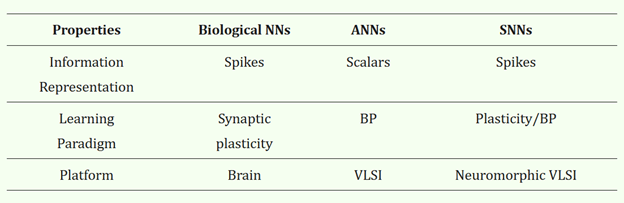
Table 1. A comparison of the different learning systems in a biological neural network, in a large language model, and SNN (Yamazaki et al., 2024).
Neurocomputing will revolutionize the concept of Hybrid Warfare
The race towards AGI tech will continue unabated. Recent breakthrough in computer hardware needed to refine SNNs, such as flash memory for synaptic plasticity and Single-Instruction-Multiple Data hardware, makes it easy to assume that soon enough, scientists are going to achieve AGI through neurocomputing (Im et al.,2025; Kim et al., 2024). Proof of concept came as early as 2024 when researchers from the Delft University of Technology, in the Netherlands, developed an ultra-efficient and agile drone using the neuromorphic computing approach (Kool, 2024). The success of the program was credited to the integration of two learning modules. The first module focused on computer vision, so that the mounted camera can process the image using the new design. The second module focuses on the drone’s motions, including flight maneuvers (Kool, 2024). The drones use a fraction of energy while demonstrating the capacity to make calculations more than sixty times faster than a conventional Graphics Processing Unit (Kool, 2024). Therefore, it is possible to use neurocomputing as a means of creating autonomous drones that are more cost-effective than conventional drones equipped with generative AI.
There are two areas within HW that neurocomputing can revolutionize. Neurocomputing can help enhance situational awareness by drastically improving a drone’s data-gathering capability (Susnea & Buta, 2021). Neurocomputing can also radically enhance the drone’s ability to read human emotions and other non-verbal cues and make the right decision whether to listen more closely to the conversation or break away to focus on other groups of people when deployed in a reconnaissance mission, for instance. Therefore, US military drones crafted to serve in HW are going to be autonomous using platforms similar to SNNs.
Trust and Safety in Developing Cutting-Edge AI
Neurocomputing has the potential to become the AI system that can closely mimic the human brain. If the goal is to replace the human decision-maker with something that can do the same or a much better job, then the proposed solution to the hybrid warfare problem invites scrutiny from the standpoint of trust and safety (Grossman et al., 2022). Trust and safety are the buzzwords surrounding innovative technology because the innovation is new, and there is not enough data to help assess how the new technology affects human lives (Grossman et al., 2022). The safety concern is always valid when evaluating an innovative solution to a complex problem; however, the demand for accountability is greater when the invention creates a human-like system for obvious reasons (Han et al., 2020). Thus, the proponents of neurocomputing need to establish guardrails to keep the technology safe from unlawful and unintended use.
Since the breakthrough performance of AI platforms has taken the world by storm a few years back, the international community has been scrambling to set up safety standards governing the development and use of AI. The World Economic Forum, for example, is an organization that strives to be one of the leaders in this type of discussion (Li & Callegari, 2024). The outputs from such collaborative actions, however, leave much to be desired. The current output, for instance, focuses on protecting the average person from identity theft and the misuse of data within the context of generative AI (Li & Callegari, 2024). Neuromorphic computing, on the other hand, is light years away from ChatGPT-type of commercialized AI, where the hype is about productivity and artistic outputs. In a recent article from Cornell University, Goldstein et al. (2023) sounded the alarm that generative language models can be leveraged for disinformation that can affect the outcomes of elections or destabilize governments. It is a serious matter, and policymakers should work double time to prevent the misuse and abuse of AI tech (McLean et al., 2021). However, the potential danger posed by human-like AI is more problematic than the risk associated with LLMs. Neuromorphic computing is the closest thing to what AI critics had been dreading since the start of the AI revolution, and that is the kind of AI tech that makes people think about an extinction-level event, specifically the rise of the machines as popularized in books and films (Raman et al., 2025). Trust and safety are just one of the most challenging aspects of pushing the innovation envelope as far as neuromorphic computing is concerned.
Conclusion
A principle of game theory states that if participants are not privy to what others are doing and if they are left on their own, each of them will strive to get the best deal or to position themselves to get the best utility. Using that framework to predict what the US Armed Forces will do in the near future; it can be argued that the US will gravitate towards two crucial ideas, and these are hybrid warfare and Artificial Intelligence. Applying the same parameters and narrowing the scope even further, it can be argued that the US will invest in robotics and autonomous systems enhanced by AI. Furthermore, the US will compete with other powerful countries like Russia to develop the next big thing in AI and that is the creation of the next generation AI called Artificial General Intelligence. The review of literature supports these assertions. The US, for example, will invest in neuromorphic computing as it moves closer to AGI. There is also proof of concept that it is possible to integrate AGI into autonomous drones. Therefore, it is only a matter of time before the US Armed Forces are going to update its HW doctrine because of the need to deploy AGI-powered autonomous drones in future battles.
References
- Araya, D., & King, M. (2022). The impact of artificial intelligence on military defence and security. Center for International Governance Innovation. https://tinyurl.com/22kps479
- Caballero-Martin, D., Lopez-Guede, J. M., Estevez, J., & Graña, M. (2024). Artificial Intelligence Applied to Drone Control: A State of the Art. Drones, 8(7), 296. https://doi.org/10.3390/drones8070296
- El Qasem, R. (2025). Understanding neuromorphic computing. Atos Technology Services.
- Li, C., & Callegari, A. (2024). Why trust and safety discussions are key to AI safety? World Economic Forum. https://tinyurl.com/2ymorykx
- Goldstein, J., Sastry, G., Musser,M., DiResta, R., Gentzel, M.& Sedova, K. (2023). Generative language models and automated influence operations: Emerging threats and potential mitigations. Cornell University. https://arxiv.org/abs/2301.04246
- Grossman, S., Sullivan, D., & Allen, J. (2022). Trust and safety comes of age? [Audio podcast episode]. In Tech policy press. Apple Podcasts. https://tinyurl.com/2dkrca58
- Han, T.A., Pereira, L., Santos, F., & Lenaerts, T. (2020). To regulate or not: A social dynamics analysis of an idealized AI race. Journal of Artificial Intelligence Research, 69(1), 881-921.
- Heaven, W. (2025). Anthropic now track the bizarre inner workings of a large language model. MIT Technology Review. https://tinyurl.com/28yawqlt
- Huang, T. (2017). Imitating the brain with neurocomputer: A new way towards artificial general intelligence. International Journal of Automation and Computing, 14(5), 521-531. DOI: 10.1007/s11633-017-1082-y
- IBM. (2023). AI vs. machine learning vs. deep learning vs. neural networks: What’s the difference? IBM Research. https://tinyurl.com/2yfmyhbl
- IBM. (2024). What is backpropagation? IBM Research.
- Im, J., Pak, S., Woo, S.-Y., Shin, W., & Lee, S.-T. (2025). Flash memory for synaptic plasticity in neuromorphic computing: A review. Biomimetics, 10(2), 121. https://doi.org/10.3390/biomimetics10020121
- Kim, K., Song, M., Hwang, H., Hwang, S., & Kim, H. (2024). A comprehensive review of advanced trends: From artificial synapses to neuromorphic systems with consideration of non-ideal effects. Frontiers in Neuroscience, 18(1), 1-29. https://doi.org/10.3389/fnins.2024.1279708
- Kool, M. (2024). Neuromorphic AI powers efficient, autonomous drone flight. Neuroscience News. https://tinyurl.com/226ewala
- Lu, J. (2024). Exploration on the application of game theory in business competition strategies. International Journal of Global Economics and Management, 5(1), 1-7. https://doi.org/10.62051/ijgem.v5n1.03
- McLean, S., Read, G. J. M., Thompson, J., Baber, C., Stanton, N. A., & Salmon, P. M. (2021). The risks associated with Artificial General Intelligence: A systematic review. Journal of Experimental & Theoretical Artificial Intelligence, 35(5), 649–663. https://doi.org/10.1080/0952813X.2021.1964003
- NATO. (2024). Hybrid threats and hybrid warfare: Reference curriculum. NATO HQ.
- Ojo, J.S. (2025). Mapping the enemy, mobilising the future: Surveillance and recruitment strategies of Lakurawa Terror Group in Nigeria. Global Network on Extremism and Technology. https://tinyurl.com/25vc7drx
- Olayiwola, O., Elsden, M., & Dhimish, M. (2024). Robotics, Artificial Intelligence, and drones in solar photovoltaic energy applications: Safe autonomy perspective. Safety, 10(1), 32. https://doi.org/10.3390/safety10010032
- Post, K. (2024). How Ukraines’ new drone-missile hybrids are changing long-range weapon technology. The Kyiv Independent. https://tinyurl.com/249rn7n2
- QuantumBlack, AI by McKinsey. (2024). What is AI (artificial intelligence)? McKisey & Company. https://tinyurl.com/2xo6wnsp
- Raman, R., Kowalski, R., Achuthan, K., Iyer, A., & Nedungadi, P. (2025). Navigating artificial general intelligence development: Societal, technological, ethical, and brain-inspired pathways. Sci Rep 15(1), 8443. https://doi.org/10.1038/s41598-025-92190-7
- Samus, M., & Artemenko, O. (2025). The impact of Artificial Intelligence on the drones’ war in Ukraine. New Strategy Center. https://tinyurl.com/2cpa5qb6
- Shahsavari, M., Thomas, D., van Gerven, M., Brown, A., & Luk, W. (2023). Advancements in spiking neural network communication and synchronization techniques for event-driven neuromorphic systems, Array, 20(1), 100323. https://doi.org/10.1016/j.array.2023.100323
- Sheikh, H. (2022). AI as a tool of hybrid warfare: Challenges and responses. Journal of Information Warfare, 21(2), 36–49. https://www.jstor.org/stable/27199968
- Slavin, B. (2023). An architectural approach to modeling artificial general intelligence. Heliyon, 9(3), e14443. https://doi.org/10.1016/j.heliyon.2023.e14443
- Song, J., & Chen, Y. (2022). A study on the application and the advancement of deep neural network algorithm. Journal of Physics: Conference Series. 2146. doi:10.1088/1742-6596/2146/1/012001
- Susnea, E., & Buta, I. (2021). Artificial intelligence in hybrid warfare: A literature review and classification. Proceedings of the 17th International Scientific Conference Strategies XXI, 17(1), 294-302. https://doi.org/10.53477/2668-2001-21-37
- Vallejo-Mancero, B., Madrenas, J., & Zapata, M. (2024). Real-time execution of SNN models with synaptic plasticity for handwritten digit recognition on SIMD hardware. Frontiers in Neuroscience, 18(1), 1-18. https://doi.org/10.3389/fnins.2024.1425861
- Yamazaki, K., Vo-Ho, V. K., Bulsara, D., & Le, N. (2022). Spiking Neural Networks and their applications: A review. Brain Sciences, 12(7), 863. https://doi.org/10.3390/brainsci12070863

